

This project spans several years and three companies—the first being Hydroswarm, and later evolving into Navier, a tech company building electric hydrofoiling boats; “flying boats,” as they’re often described.
The founder, Sampriti Bhattacharyya, is an MIT-trained engineer with a passion for cutting-edge ocean technology. I met Sampriti back in 2017, and what follows are a few samples of work from throughout the years.
The mission — Design the branding, product visuals, and pitch materials needed to win funding and contracts.
Beginnings
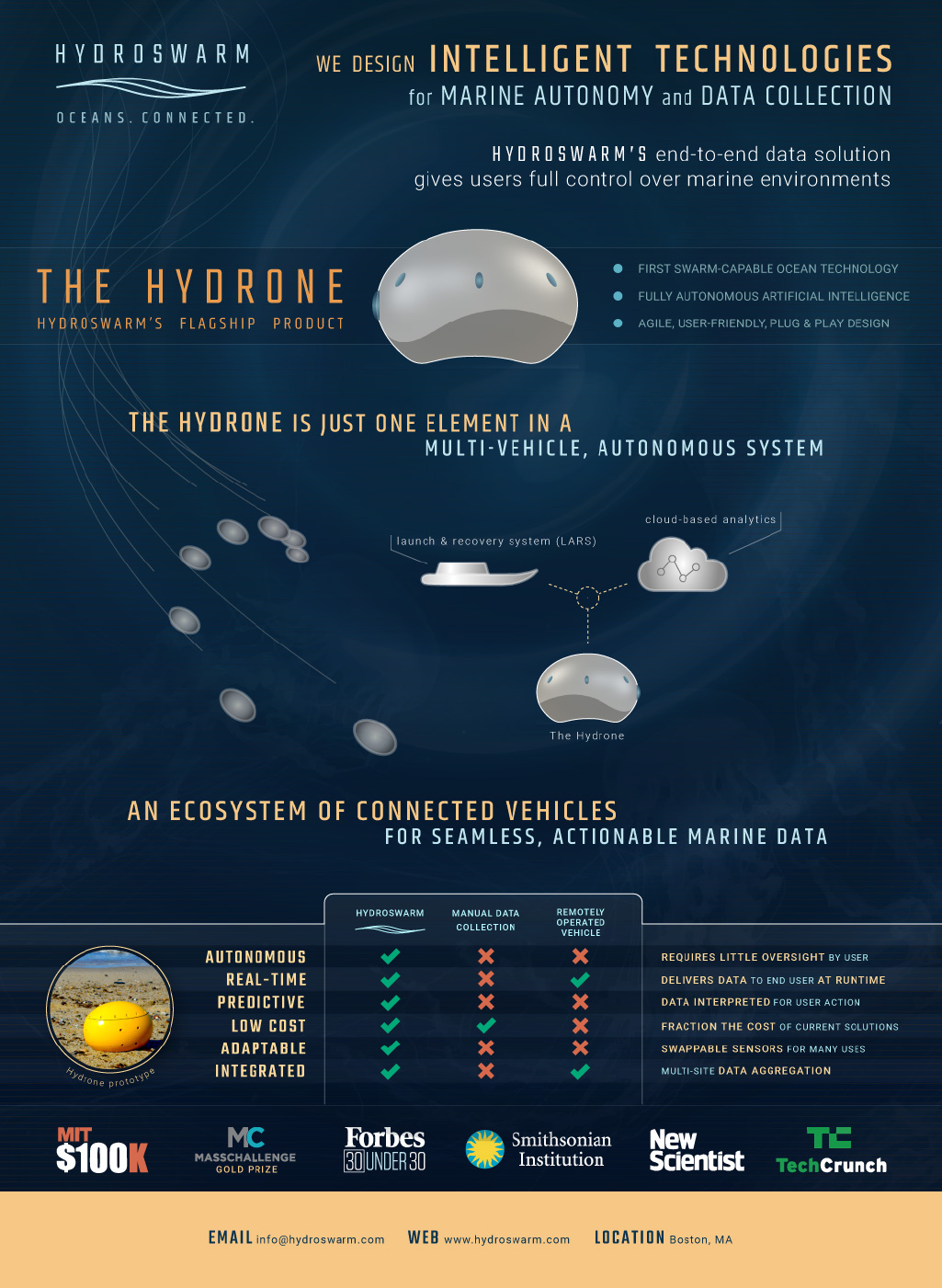
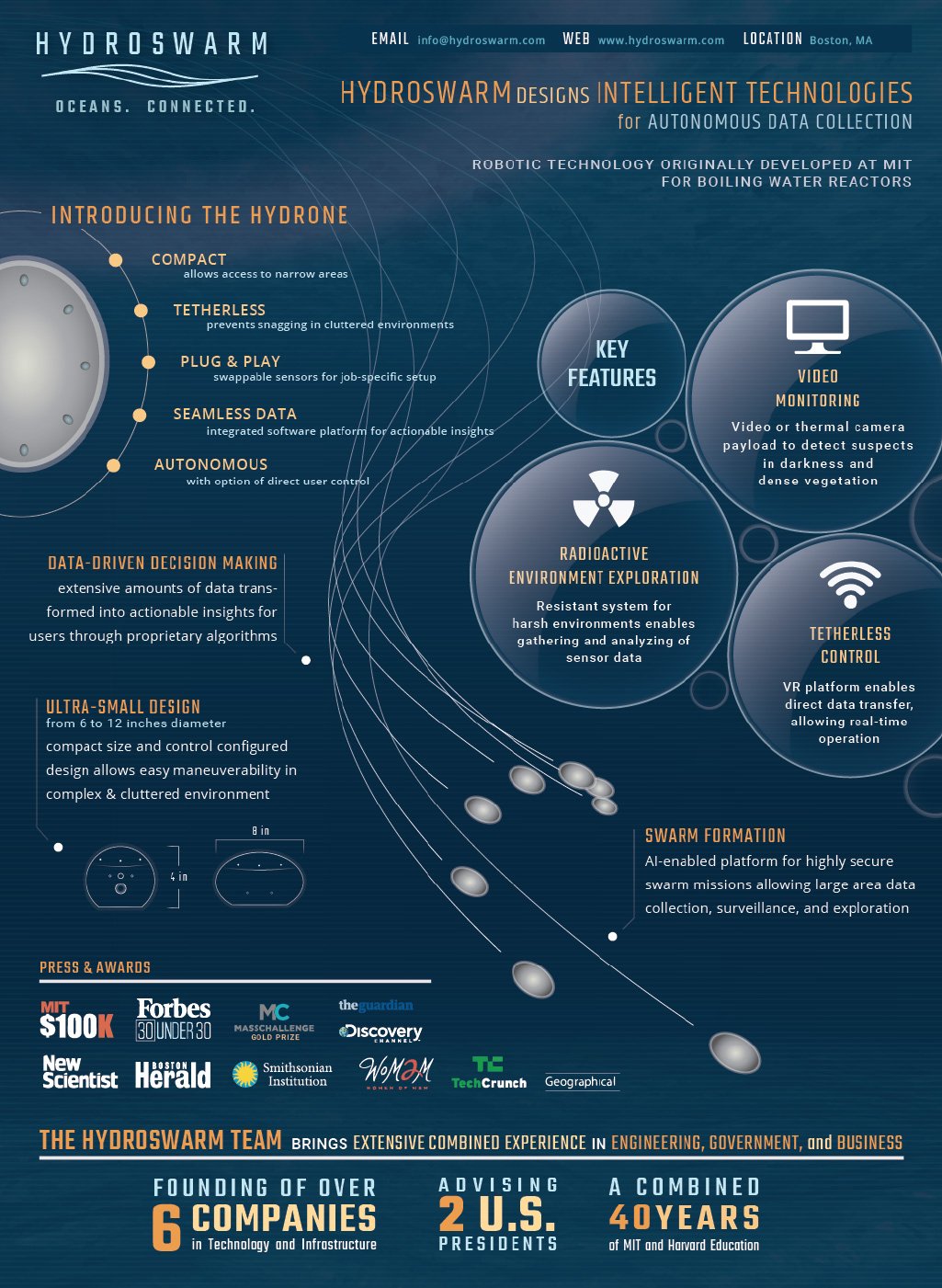
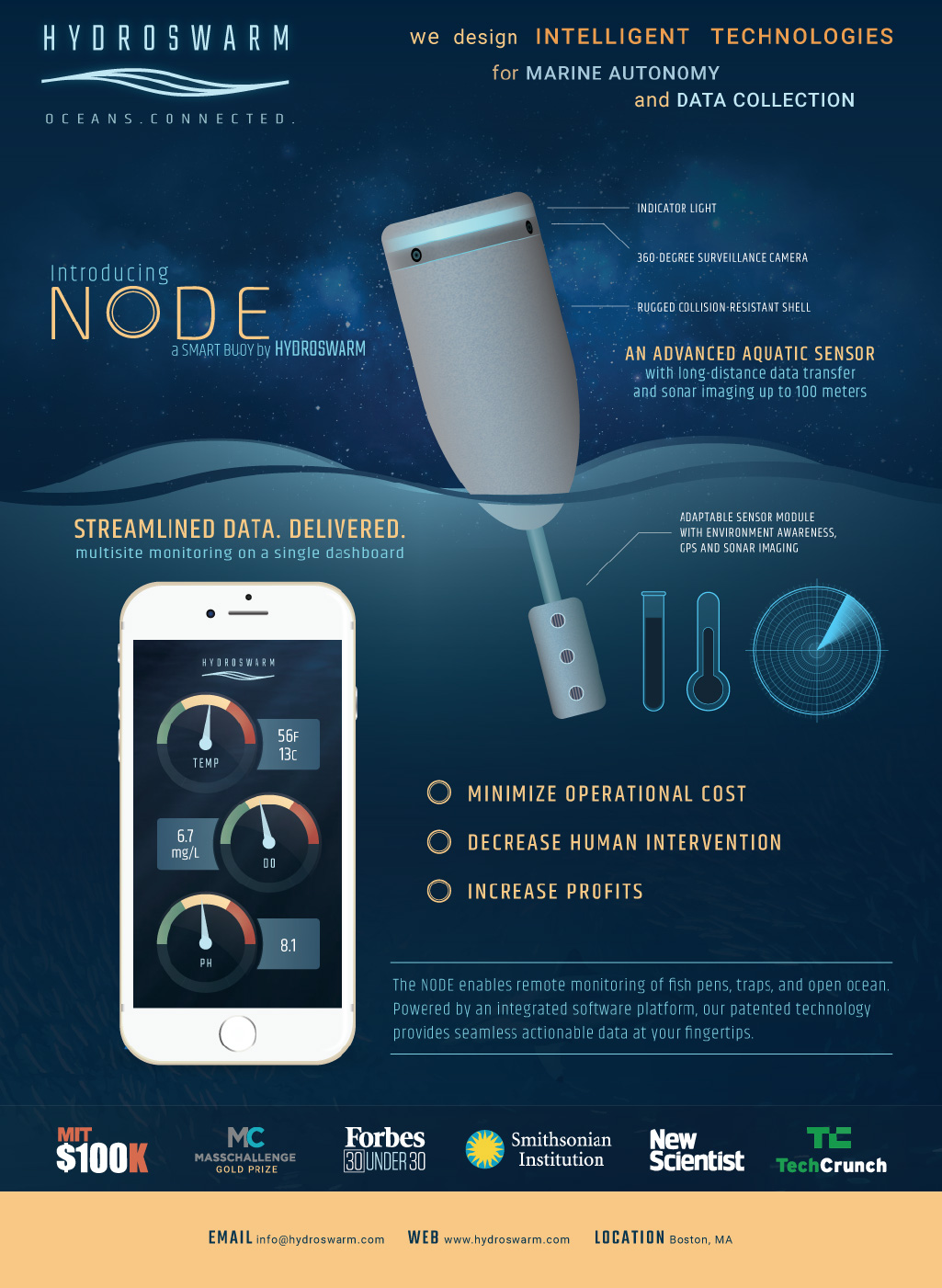
The earliest work fell under Hydroswarm, a company building underwater robotic drones to replace larger, clunky UAVs. Its flagship product, the Hydrone, was an autonomous underwater drone built to map and monitor ocean environments without a tether to the surface.
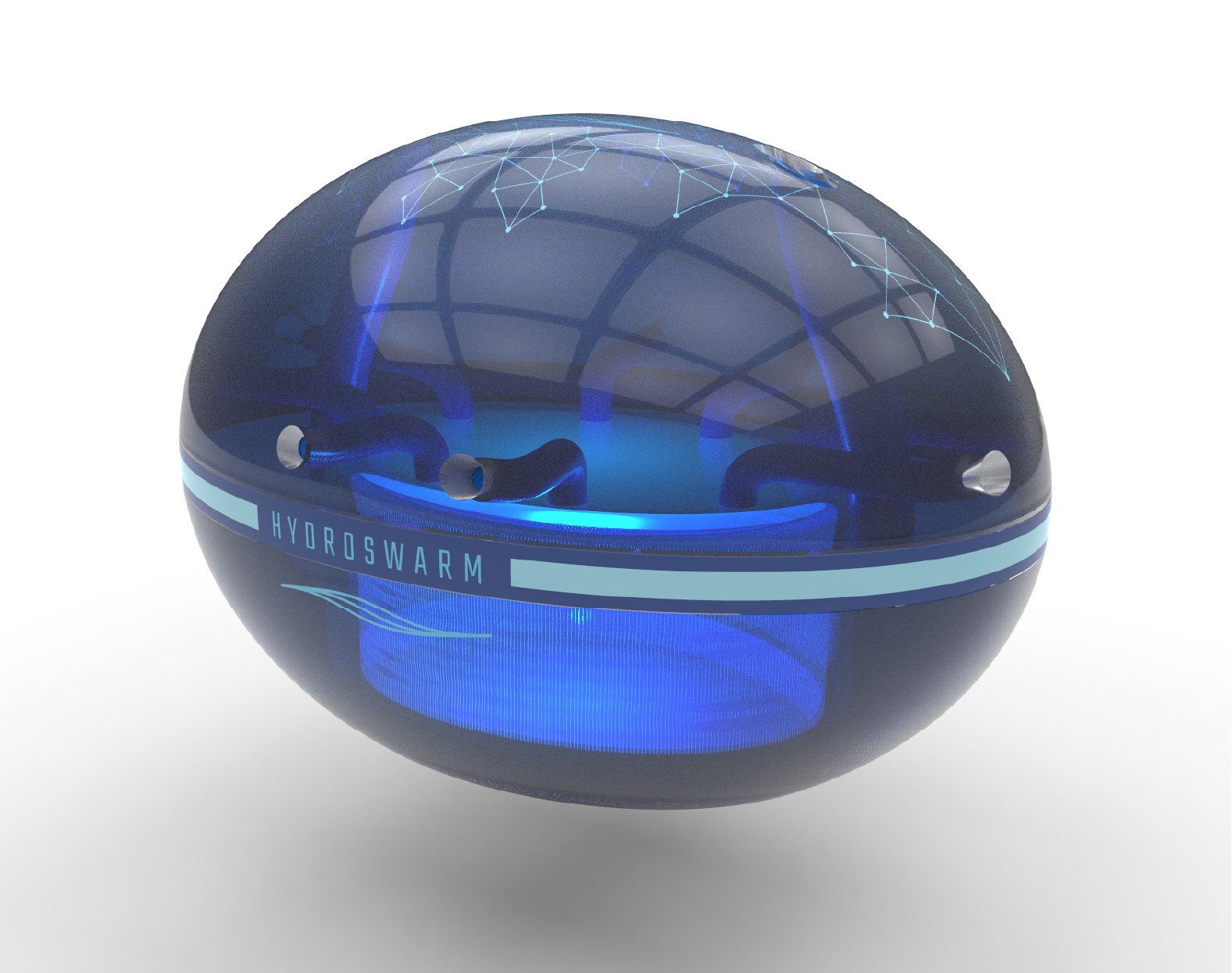
Image detail — Working with the CEO, I helped refine the design of this display model [above][right], featuring a semi-transparent outer shell and internal lighting.
Early Work
I owned the company's visual language: typography, colour system, and the marketing materials that got the technology in front of the right people. That included one-pagers, pitch decks, and later the frontend interfaces used to visualise the data itself.
Onet
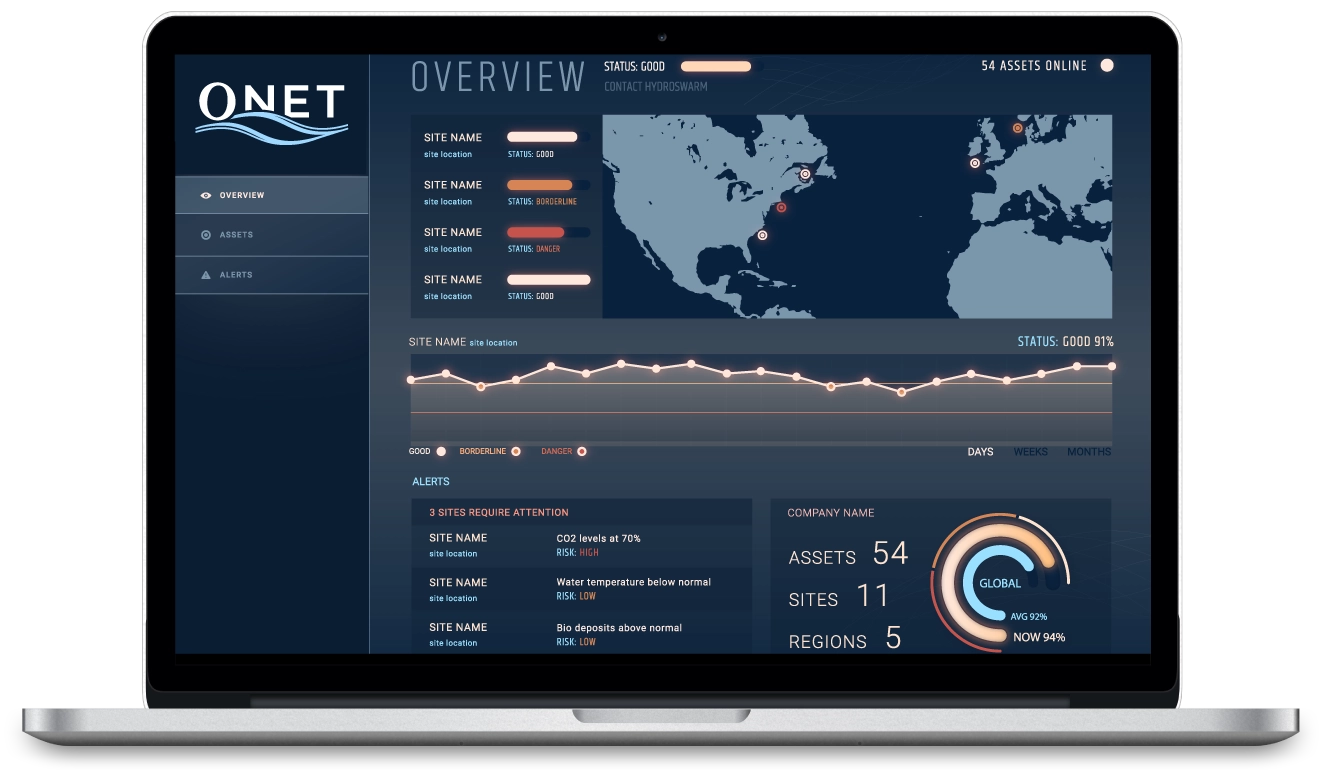
Hydroswarm eventually expanded its scope beyond the tech that gathers data from the environment to include the tech that receives and processes it, requiring both ocean-surface receivers and the software behind them.
Image detail — Shown here is the beta UI design I created to display stats across multiple ocean assets, water pH, CO2 levels, and temperature among them.
The Node
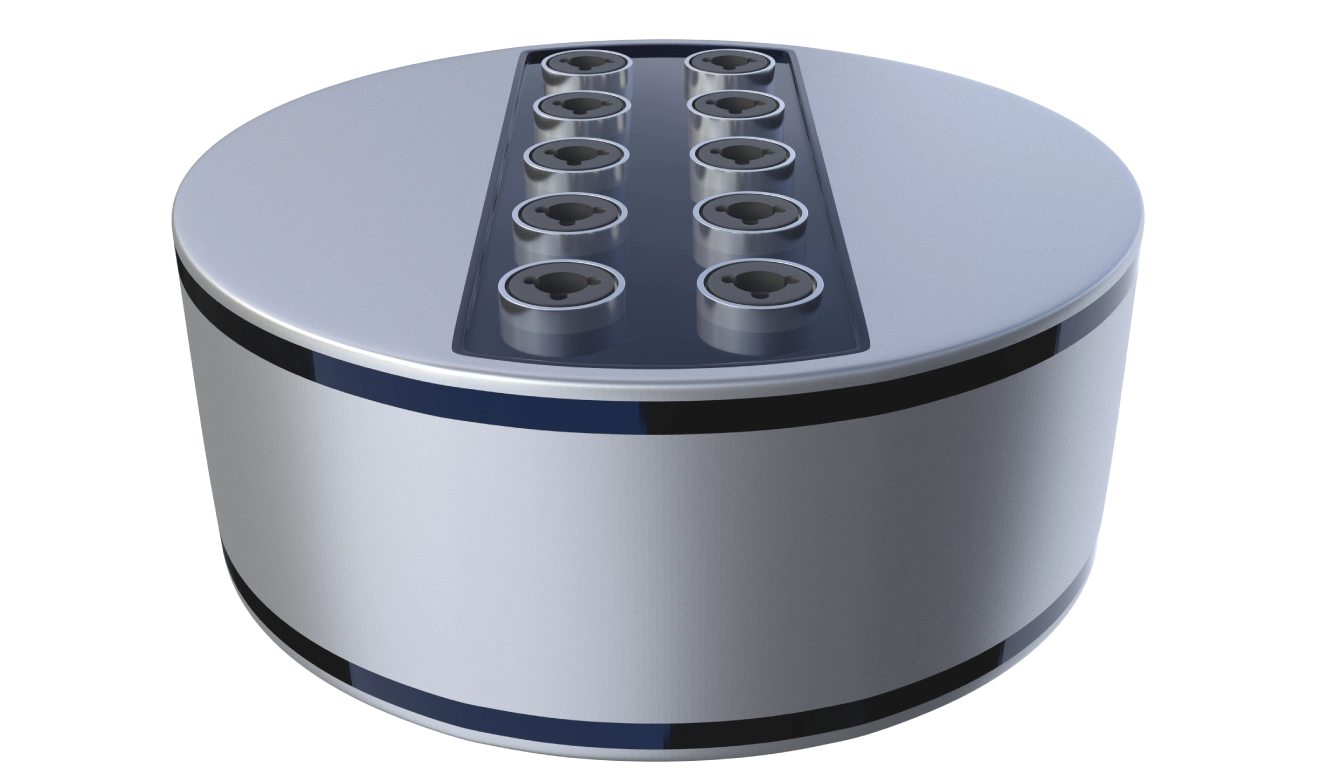
The Node was a plug-and-play device that could connect to selectable sensors housed in a “smart buoy.”
Image detail — Shown here is the initial design I helped create (in Blender). The goal was a minimal form that fit seamlessly inside an inconspicuous ocean buoy.
The Smart Buoy
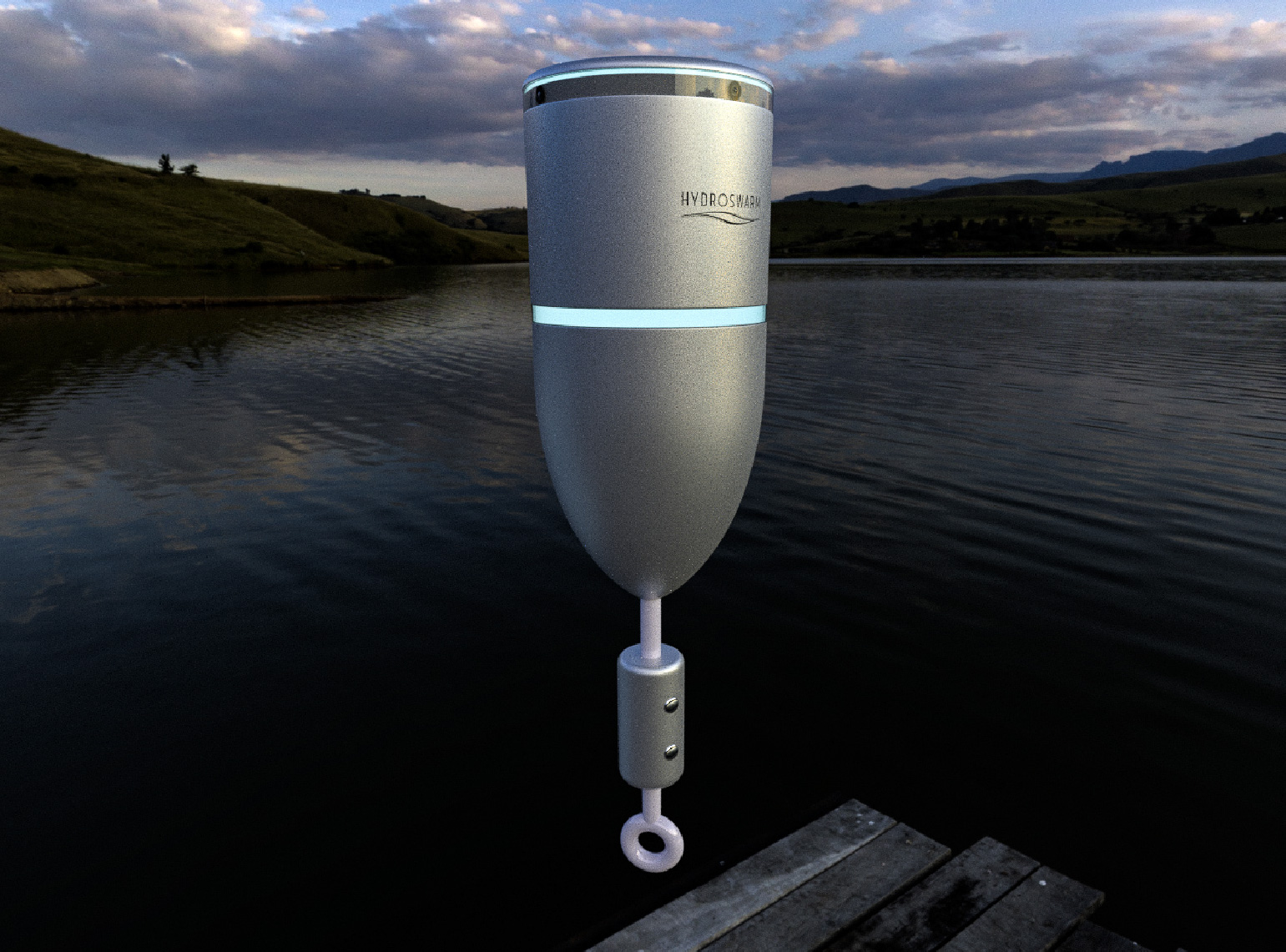
The smart buoy could read sensor-derived data locally, network with neighbouring buoys to form a mesh network, or communicate directly with underwater drones.
Image detail — Pictured here is the beta design for the smart buoy, housing underwater sensors, a built-in 360-degree camera system, and the internal Node.

Navier
By 2021, Onet gave way to Navier, a bigger opportunity, and one worth chasing. Where Hydroswarm and Onet were about sensing and monitoring the ocean, Navier was about moving through it: electric hydrofoil boats, built for speed, silence, and scale.
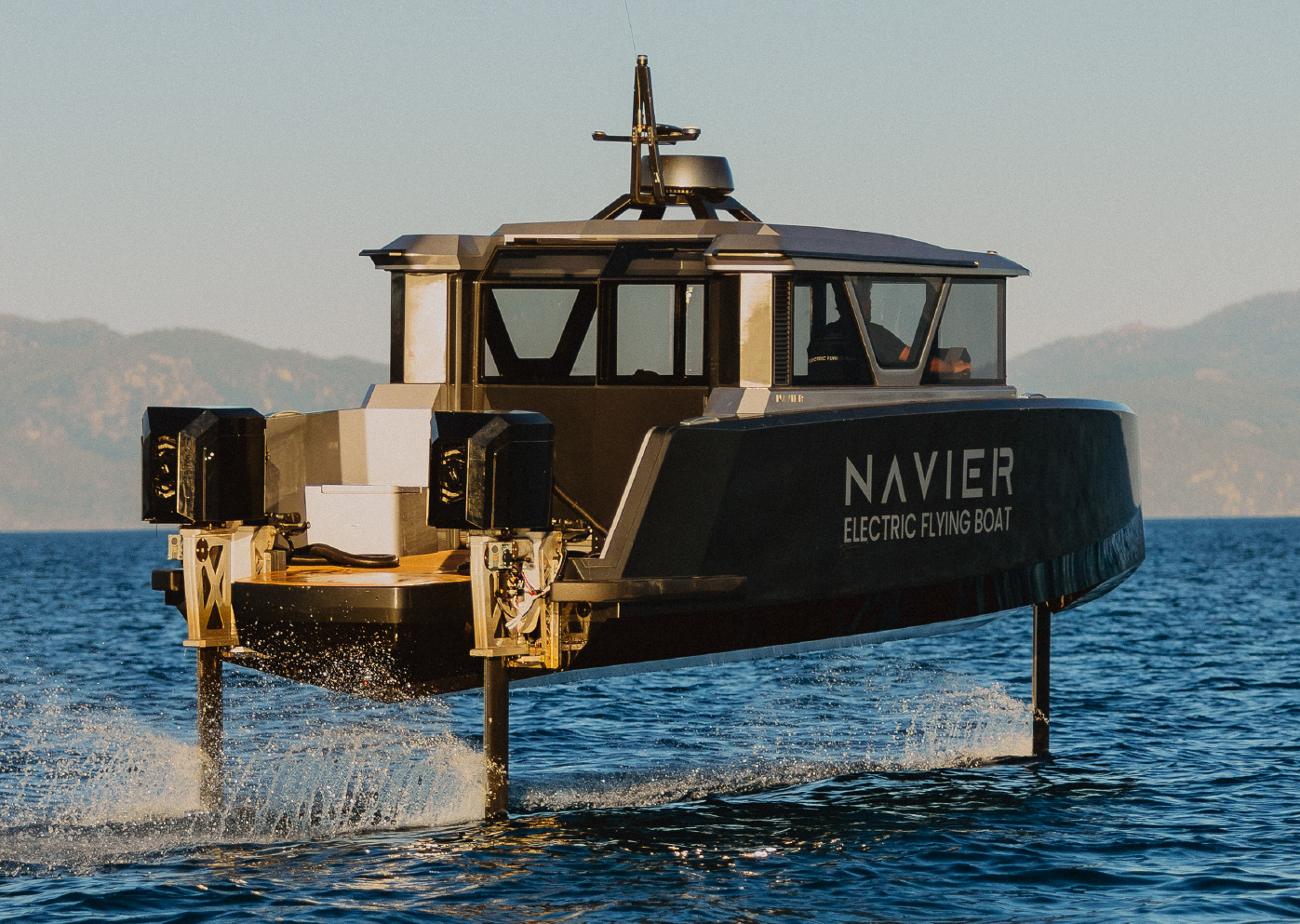
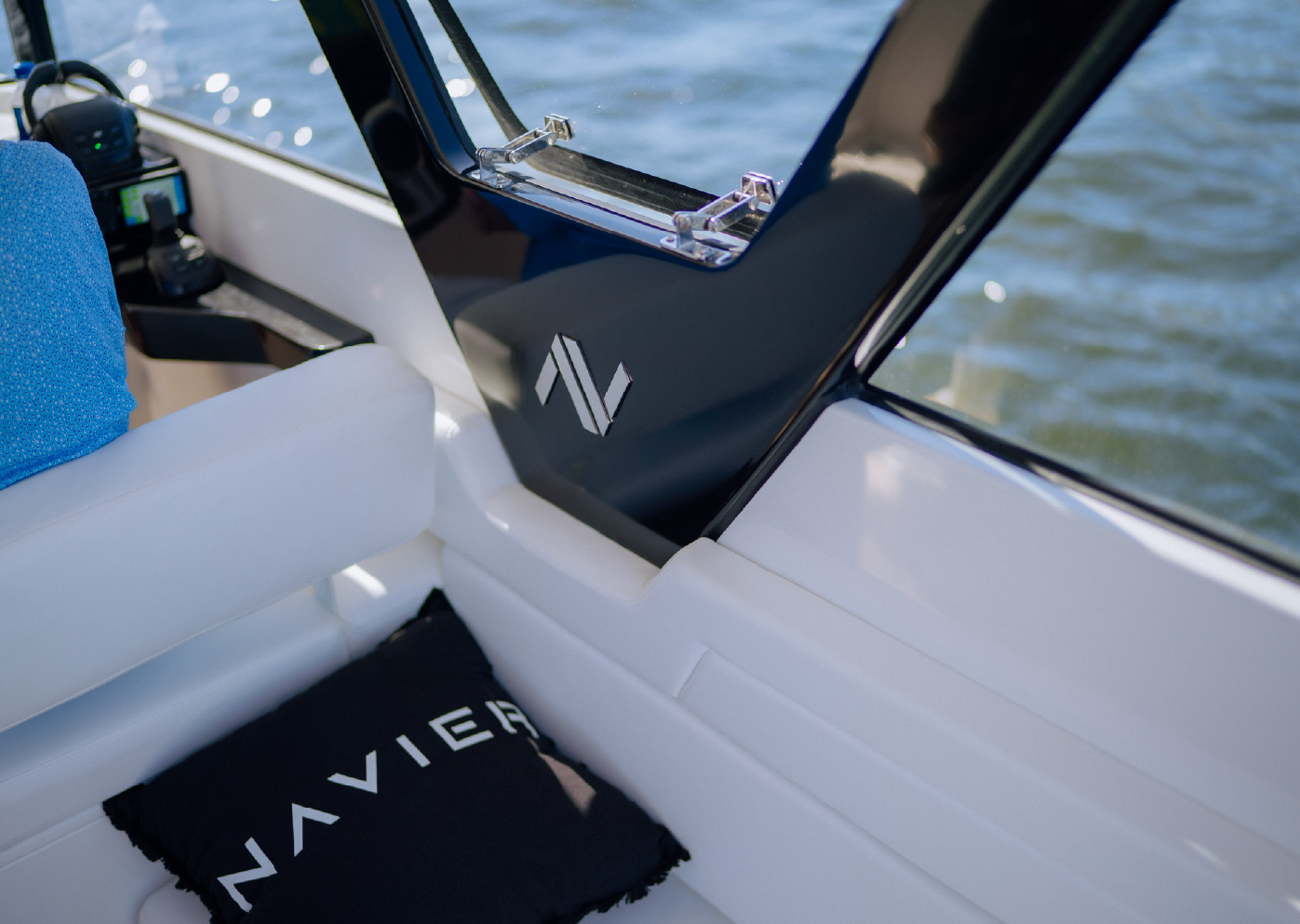
Higher Stakes
With Navier, the focus shifted to pitch materials, mainly decks and one-pagers. Working with Sampriti and the team, the goal was straightforward: bring in new contracts, gain additional exposure, and raise additional funding.
Refining the Message
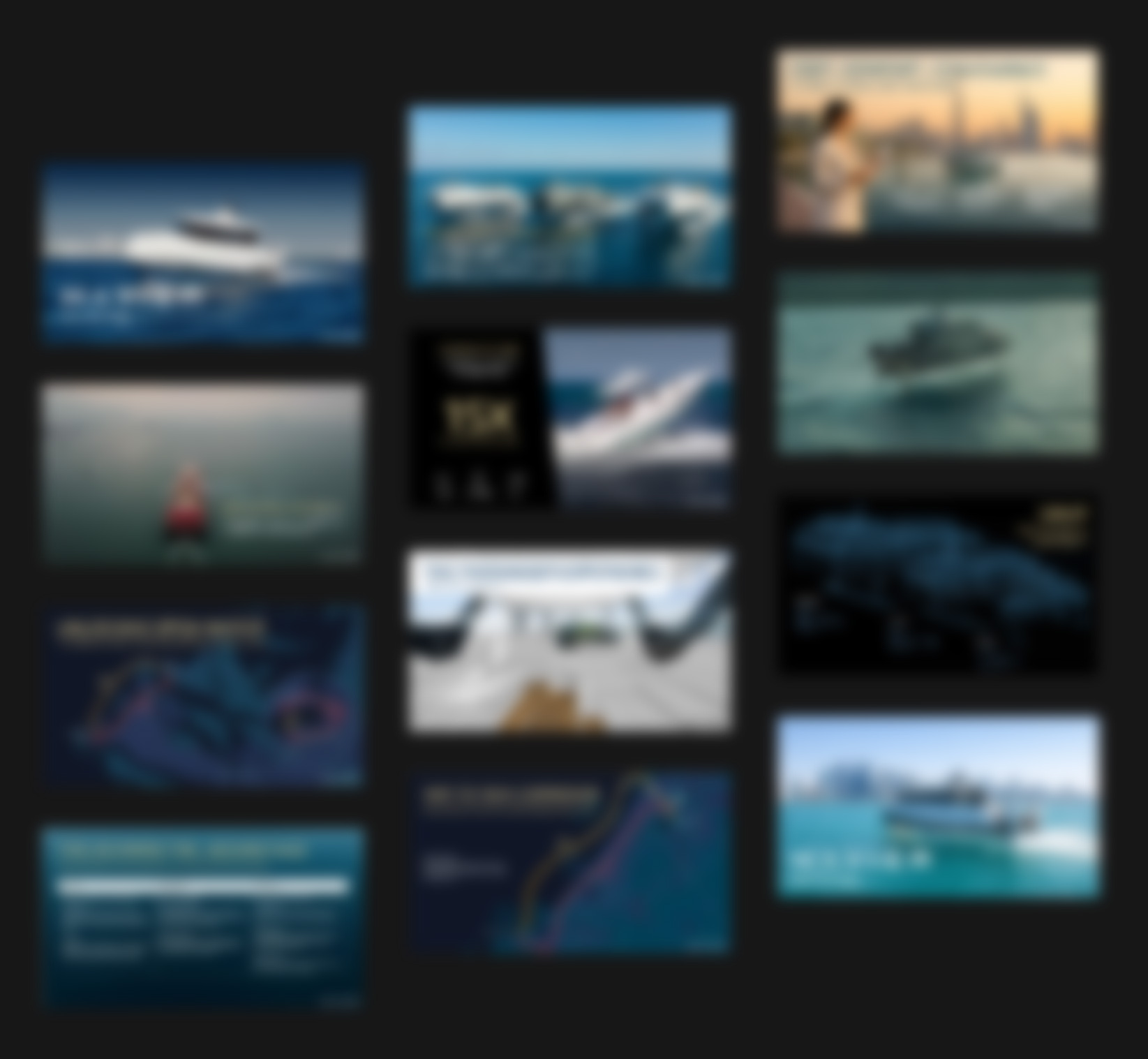
Of the many decks I contributed to, two stood out: a deck for UpSummit, and a set of decks targeting new contracts in the UAE and wider MENA region. Both meant working closely with teammates handling video and 3D renders, coordinating so everything landed as one coherent story rather than a patchwork of parts.
Note — Slide details are blurred throughout to protect confidential client and partner information. What's shown is the shape of the work, not the content.
The Process
Most of the raw material already existed; facts, figures, product details, but not always in a form that read well or landed fast. The job was to rework the text so the story flowed, pair it with imagery that reinforced the point rather than just illustrating it, and do all of this within Navier's established brand book rather than reinventing the visual language from scratch.
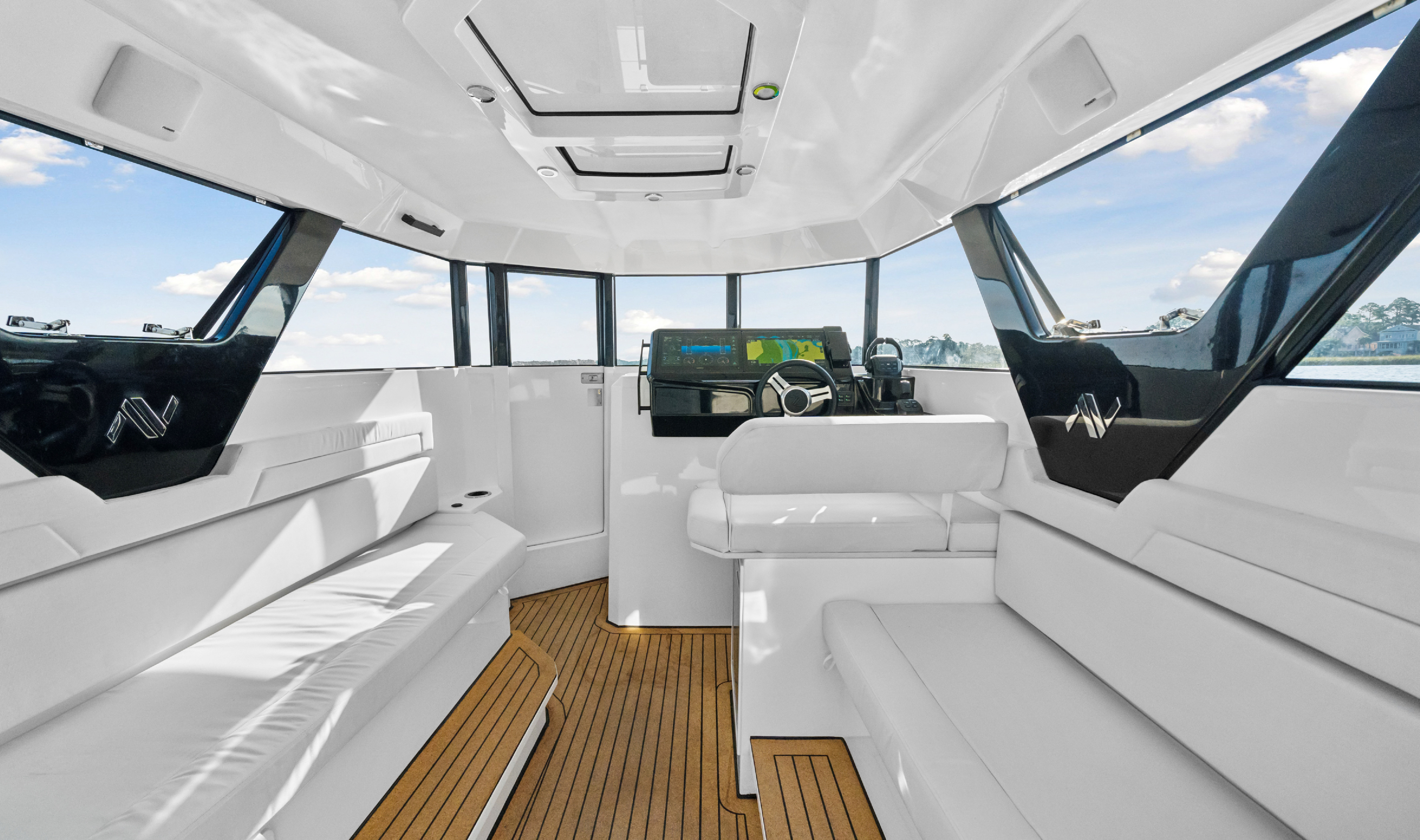
The outcome — A $100M contract to bring 100 electric hydrofoil boats to the Maldives.